You’ve booked your practical test. Now you want as much practice as possible without risking someone else’s insurance or making long-term changes to their policy.
That’s where short-term learner car insurance can help.
Short-term learner car insurance is temporary cover arranged in your name as a provisional driver. It allows you to practise in a family member’s car for a fixed period, as long as you’re supervised and both you and your supervisor meet the eligibility rules.
With Dayinsure, learner cover runs for a set number of days. If the car already has an annual insurance policy in place, cover can start from 1 day. If the car does not already have annual insurance, policies start from 1 month (28 days). Cover ends immediately if you pass your test.
In simple terms, weekly learner cover gives you structured, legal practice during test week without permanently changing the car owner’s annual policy.
Dayinsure learner cover at a glance
Here’s what sets Dayinsure learner cover apart:
- Comprehensive cover only
- Available from 1 day up to 5 months (or from 1 month if the car does not already have annual insurance)
- For provisional licence holders only
- Supervisor must be aged 25 to 75 and hold a full GB licence for at least 3 years
- The car must already have annual insurance if you are not the legal owner
- Vehicle value limit of £40,000 for loss claims
- Cover ends immediately once you pass your test
This is temporary learner driver insurance arranged in your name. It does not replace the car owner’s annual policy. It sits alongside it, giving you short-term, structured cover while you prepare for your test.
What is short-term learner car insurance?
Short-term learner car insurance is a standalone policy designed for provisional drivers who want flexible, short-term practice.
Unlike an annual policy, which usually runs for 12 months and is arranged by the car owner, this type of provisional car insurance is arranged in your name for a limited period. That could be learner insurance for a week or a set number of days during test preparation.
With Dayinsure:
- The policy is separate from the car owner’s insurance
- It does not build no claims discount
- You must always be supervised
- You cannot drive alone
This type of short-term car insurance for learners can be helpful if you want extra practice before your test without being added as a named driver for the whole year.
The car must meet eligibility criteria, and you must meet driver requirements. If you do not own the car, it must already have annual cover in place.
Why test week is different from regular practice
Test week often feels more intense than the rest of your learning journey. Practice tends to increase, and the focus shifts to polishing weaker areas rather than learning new skills.
Learner insurance for test week can support:
- Daily practice sessions
- Mock tests under timed conditions
- Revisiting manoeuvres like parallel parking
- Confidence building on busy roads
Many learners choose learner insurance for a week so they can practise consistently in the days leading up to the test.
Typical test week scenarios include:
- Early morning practice before work
- Short evening drives to refresh key skills
- Practising test routes
- A final run through the night before
Weekly learner driver insurance gives you clear start and end dates so you know you’re covered during that focused period.
Top ways weekly learner cover can make test week smoother
More flexible practice sessions
With weekly learner driver insurance, you aren’t limited to formal lessons. You can arrange practice around your schedule, as long as you are supervised by someone eligible.
If you only need cover for a short period, a single-day policy may be suitable when the car already has annual insurance. If you plan to practise most days, learner insurance for a week is often simpler and more practical.
That flexibility helps reduce pressure during test week, allowing you to focus on improving your driving rather than organising insurance.
Clear start and end dates
Weekly cover has clearly defined start and end times, which you choose when you buy the policy.
That structure can feel reassuring during an already stressful week. You know exactly when your cover begins and ends, and there’s no uncertainty about whether you’re insured.
If you pass your test, cover stops immediately. You would need to arrange full driver insurance before driving unsupervised.
Confidence knowing you’re properly insured
Short-term learner car insurance provides comprehensive cover while you practise under supervision.
You are covered to drive the specified vehicle during the agreed period, subject to the policy terms. Policies arranged by Dayinsure are underwritten by Aviva Insurance Limited and comply with UK regulations.
Knowing you have appropriate cover allows you to focus on your driving, not on what might go wrong.
Weekly learner driver insurance vs being a named driver
If you’re deciding between weekly learner driver insurance and adding a named driver to an annual policy, here’s how they compare.
Weekly learner driver insurance
- Separate policy in the learner’s name
- Limited to a short, defined period
- Quick online setup
- May reduce risk to the main no claims discount
- Claims are handled under the learner’s temporary policy
Named driver on an annual policy
- Added to the main annual policy
- Ongoing change to annual cover
- Policy amendment required
- Claim could affect the main policy
- May impact the main policyholder’s no claims discount
If you only need cover for test week, weekly learner driver insurance is often simpler and more contained.
If you are practising regularly over several months, being added as a named driver may be more suitable.
The right option depends on how often you plan to drive and how comfortable the car owner is with changing their annual policy.
Supervised driving rules you must follow
Supervised driving rules for learners are strict, and Dayinsure policies follow clear requirements.
You must:
- Hold a valid provisional licence
- Be supervised at all times
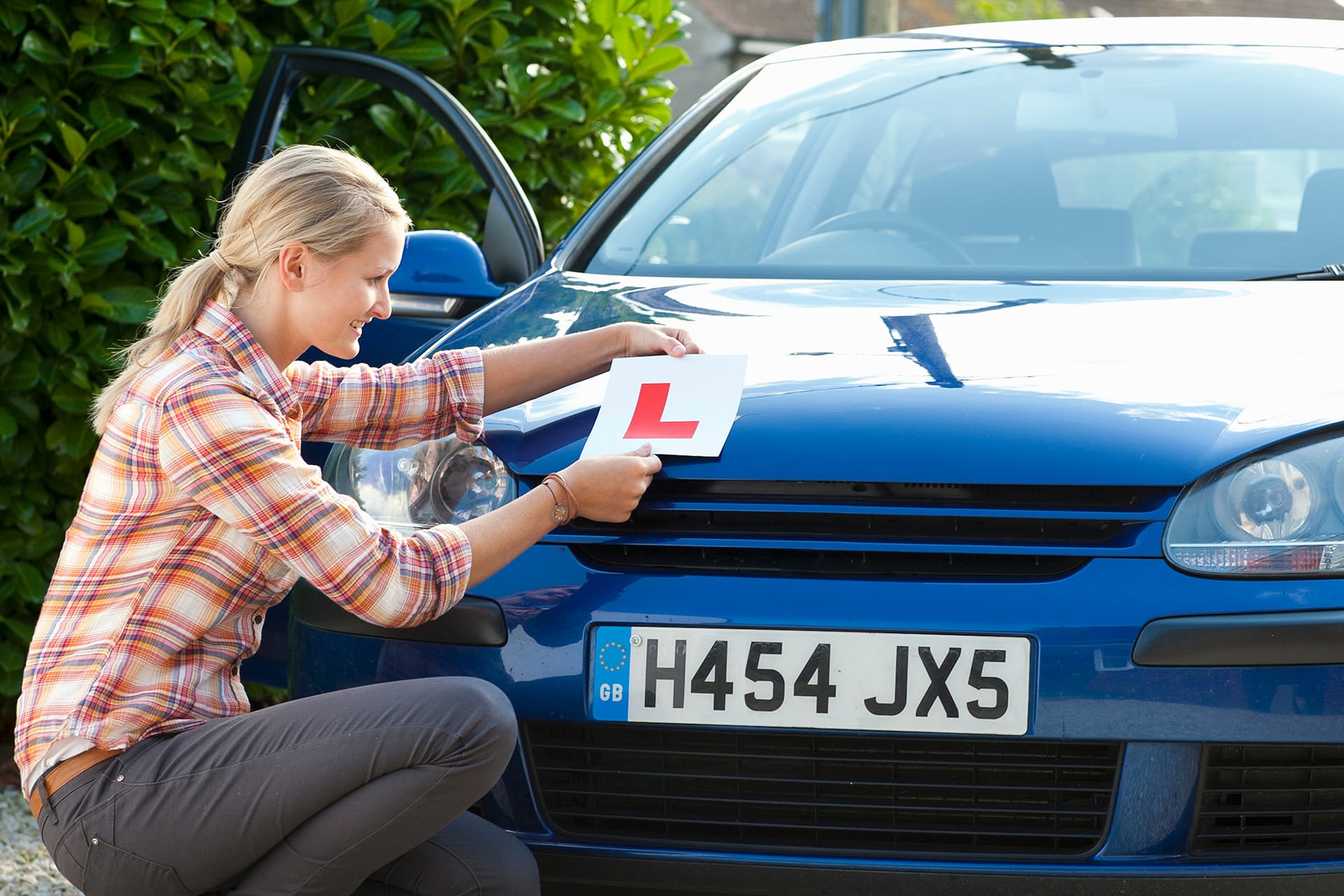
- Display L plates on the vehicle
Your supervisor must:
- Be aged between 25 and 75
- Have held a full GB licence for at least 3 years
- Be qualified to drive the type of vehicle you are practising in
They must not use a mobile phone while supervising.
Can a learner drive on motorways? Yes, but only with a DVSA approved driving instructor in a dual control car. Motorway driving is not permitted with a family member or friend supervising.
You must never drive alone under a learner policy.
What Dayinsure learner insurance does not cover
Transparency matters, especially during test week.
Dayinsure learner cover does not allow:
- Driving alone
- Driving after you have passed your test
- Driving other vehicles
- Track days or racing
- Release of a seized vehicle
- A courtesy car
Learner cover ends immediately once you pass. You cannot drive home on the same policy.
To be eligible for learner insurance, the car must also meet the acceptance criteria. For example, it must not be a hire or rental vehicle, and it must not have non factory engine modifications.
Always check your policy documents so you understand the full terms.
Vehicle and driver eligibility with Dayinsure
Short-term car insurance for learners has different eligibility rules to full license holders:
Driver requirements include:
- Aged between 17 and 50 with a provisional licence
- No penalty points
- No unspent convictions
- No history of insurance cancellation
Vehicle requirements include:
- Registered in the UK
- Market value under £40,000
- Under 3.5 tonnes
- Engine size under 3000cc
- No non factory engine modifications
- Not a hire or rental vehicle
- No more than 7 seats
If you are not the legal owner, the car must already have annual insurance in place.
Full details are explained in the temporary car insurance eligibility guide.
What happens to learner insurance when you pass your test?
What happens to learner insurance when you pass is simple.
Cover stops immediately once you pass your practical test. From that moment, you are no longer insured under the learner policy.
You cannot drive home from your test using the same cover. You must arrange a full driver policy before driving once you’ve passed your test.
This rule is important during test week. If you expect to drive home after passing, you should plan your new insurance in advance.
Understanding this rule helps to avoid any accidental uninsured driving.
How the Motor Insurance Database works with Dayinsure
The Motor Insurance Database is a national record of insured vehicles in the UK.
Dayinsure guarantees to update the database at least every 7 days and sometimes more often. There can be a short delay between buying a policy and it appearing on the system.
You are legally insured to drive between the start and end times shown on your certificate. Always keep your certificate accessible in case you need to prove cover.
If you have questions, we have plenty of help and support that explains more on how our policies work.
Can you practise in your parents’ car during test week?
Yes, you can practise in your parents’ car during test week if you have the correct practice driving in parents’ car insurance.
With Dayinsure learner cover:
- You must meet driver eligibility rules
- The car must meet vehicle criteria
- The car must already have annual insurance if you are not the legal owner
- You must always be supervised
This setup allows structured, legal practice without permanently altering your parent’s annual policy.
Ready for test day with confidence
Test week can feel intense. The right cover can make it calmer.
Weekly learner driver insurance gives you:
- Flexible supervised practice
- Separation from the car owner’s annual policy
- Clear start and end dates
Short-term learner car insurance helps you focus on improving your driving while staying legal and protected.
If you’re heading into test week and want flexible cover, you can get a quote online in minutes.
FAQs
How long can short-term learner car insurance last?
It can last from 1 day up to 5 months with Dayinsure. You choose the start and end times when you buy the policy. This makes it suitable for a single session or a full test week.
Can I get learner insurance for just one week?
Yes, if you’re borrowing the car you plan to learn to drive in. Learner insurance for a week is a common option. You select the dates that match your test week, and cover runs for that defined period. If you own the car you’re learning to drive in, coverage begins from one month.
Does the car need its own annual insurance?
Yes. If you are not the legal owner, the car must already have annual insurance in place. Learner cover does not replace the main policy.
Can a learner drive on motorways?
Yes, but only with a DVSA approved driving instructor in a dual control car. You cannot drive on a motorway with a family member supervising.
Can I practise every day during test week?
Yes, as long as your policy is active and you follow supervision rules. Weekly cover can make daily practice easier.
Does learner insurance affect my parent’s no claims discount?
Because the policy is arranged in your name, it may help reduce the risk of affecting the main policy. However, always check the terms of both policies.
Can I start learner insurance immediately?
In many cases, cover can start shortly after purchase. You choose the start time when arranging the policy, subject to eligibility and underwriting checks.